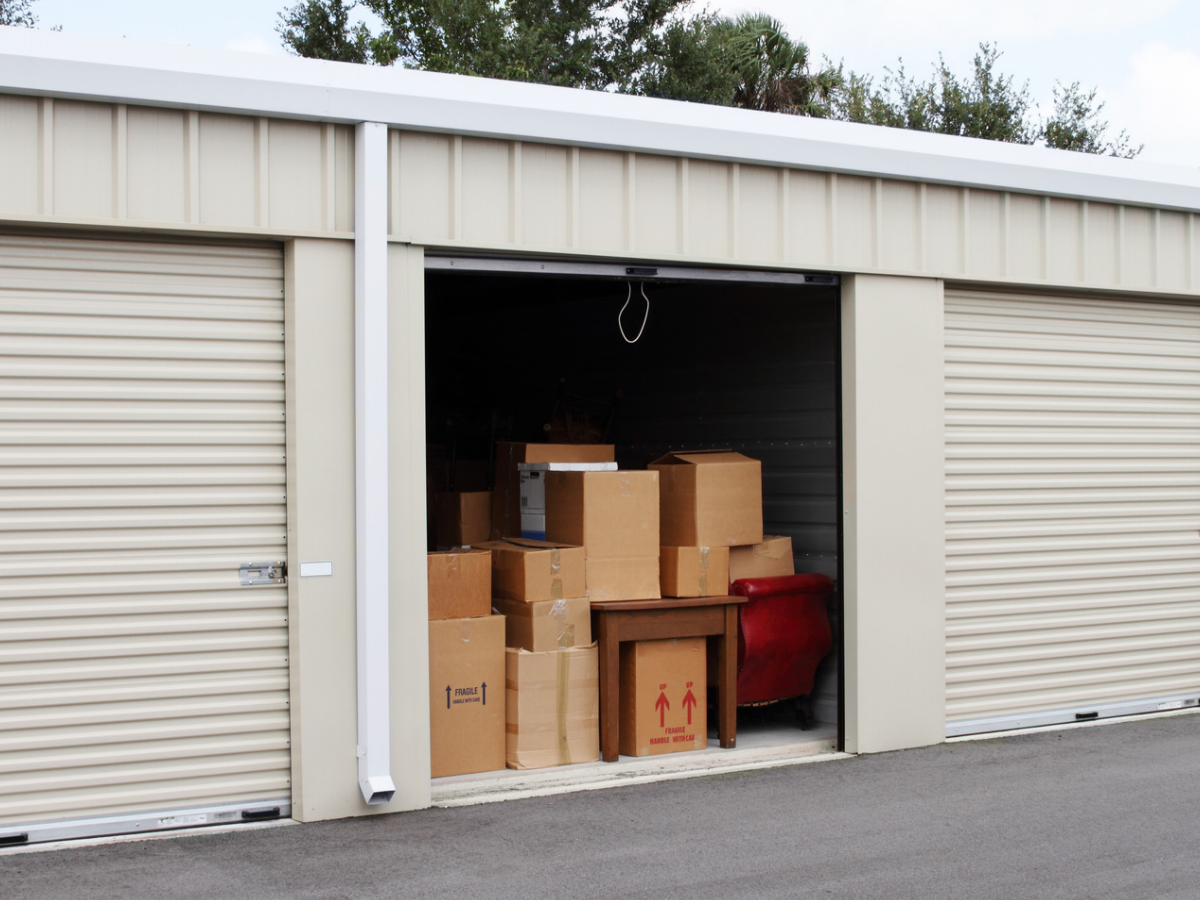
Our standard units range from around 10 sq ft, about the size of a telephone box, up to roughly 200 sq ft, the size of a double garage, with ceilings between 7ft and 10ft high. That height is where a good layout will focus.
Five storage unit layouts that make the best use of space
The best storage unit layout depends on what you’re storing and how often you’ll visit. These five cover most situations, and you can happily mix them.
1. The perimeter and aisle layout
Line the back and side walls with your largest items first, such as wardrobes, bagged mattresses and sofas stood on their ends. Then fill towards the middle, leaving a narrow walkway from the door to the back. The aisle means you can reach any box without unpacking half the unit, and it lets air move around your belongings. This layout suits deep units and full house moves.
2. The front-to-back access layout
Put the things you’ll need least, like spare furniture or the contents of the loft, at the back, and keep everyday items near the door. During a house move, the front of the unit is the place for the mugs, the toolkit and the paperwork. It also suits anyone rotating their wardrobe between seasons, since this season’s clothes can stay within easy reach.
3. The zone layout
Divide your unit into areas by room or category: furniture in one corner, kitchen boxes in another, and garden or sports kit by the door. Zones make things far easier to find, and they work well for business storage, where stock, archive boxes and equipment each get their own section.
4. The shelving layout
Freestanding shelves or racking turn the height of your unit into usable space and stop the bottom boxes being crushed under heavy stacks. This layout works especially well in smaller units and for anyone who visits often. We sell or hire racking, and for rooms up to 200 sq ft, we’ll plan the room around your needs and put the racking up for you at no extra charge.
5. The furniture-as-storage layout
Empty wardrobes and chests of drawers are mostly full of air, so fill them with bedding, books or small boxes. Stand sofas and mattresses on their ends to free up floor space, and stack lighter boxes on top of sturdy furniture. Our helpful hints page has more advice on preparing furniture for storage.
How to fit the most stuff in a small storage unit
In a small unit, every gap counts. These efficient storage packing habits help you maximise storage unit space without putting your belongings at risk:
- Use uniform, stackable boxes so your stacks stay stable and leave fewer awkward gaps
- Pack each box full, using towels or bedding to fill spaces, so it doesn’t collapse under the weight above
- Keep heavy items low and lighter boxes on top. Stack the fridge on the washing machine, never the other way round.
- Take apart beds, tables and shelving, and tape the screws in a labelled bag to the frame
- Use vacuum bags for duvets, pillows and winter coats
- Label every box on at least two sides and keep a list on your phone of what’s where
If you run short of boxes, tape or dust sheets, our sites stock a full range of packing materials.
Storage unit help in Farnborough, Hemel Hempstead and Watford
At Blue Box Storage, our sites have 24-hour monitored CCTV and alarm systems, and a friendly member of our team is always on hand during access hours. We don’t charge admin fees, and our rolling contracts need only two weeks’ notice when you’re ready to move out.
Moving day is easier on your back too, with trolleys, pallet trucks and sack barrows ready to help you get heavy items from the van to your room. Whether you’re clearing space before selling your house or making more room for everyday life with home storage, we’ll help you find a size and layout that fits.
Find the right layout and the right size of unit
The best storage unit layouts put big items against the walls, heavy things low, everyday items at the front and a clear path down the middle. Get those basics right and a smaller unit often holds more than you’d expect, which keeps your monthly costs down.
You don’t need to work it all out alone. Get a quote and our team will help you choose the right size for everything you’re storing. Have questions? Contact us! We’re always happy to talk it through.